The Starbucks Dark Roast Style
Starbucks roasts darker than most American brands, and the dark shelf is where that shows. The beans are taken past the second crack until the surface turns oily, which trades origin acidity for body, caramelized sugar and smoke. Dark roasts carry slightly less caffeine per scoop than blonde, stand up to milk better than any other roast, and are the coffees people mean when they say Starbucks tastes burnt or, depending on the person, tastes right.
| Bag | Notes | Best for |
|---|---|---|
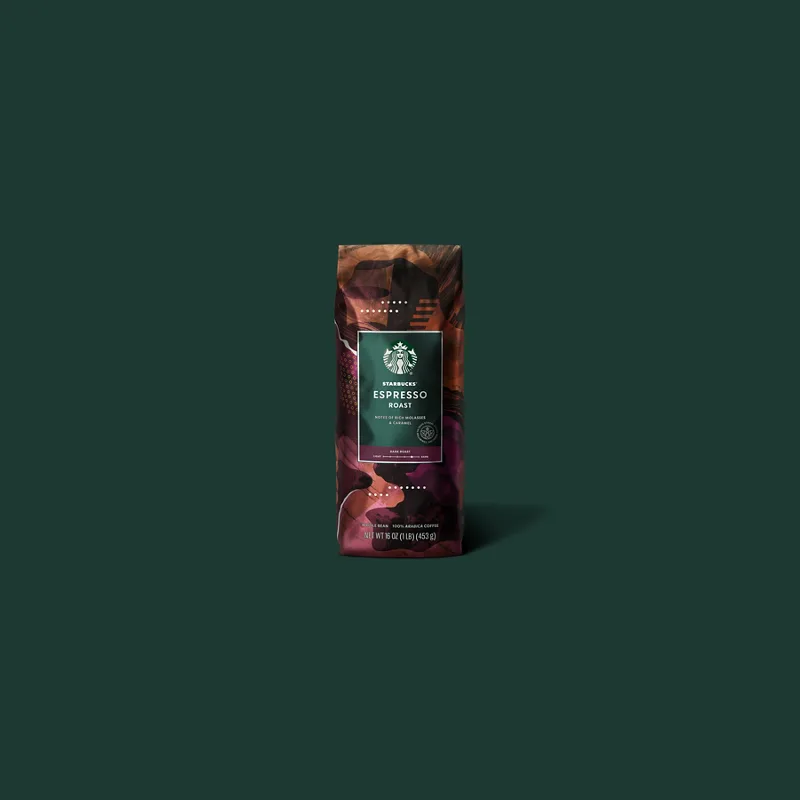
| Espresso Roast | Molasses, caramel | Espresso, moka pot |
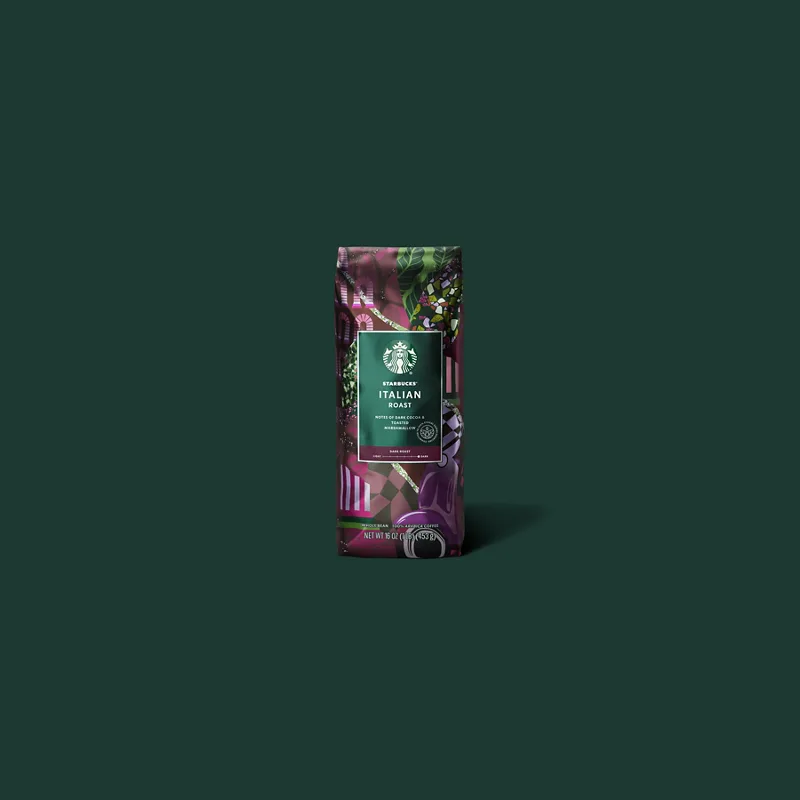
| Italian Roast | Deep caramel, intense | Drip with milk |
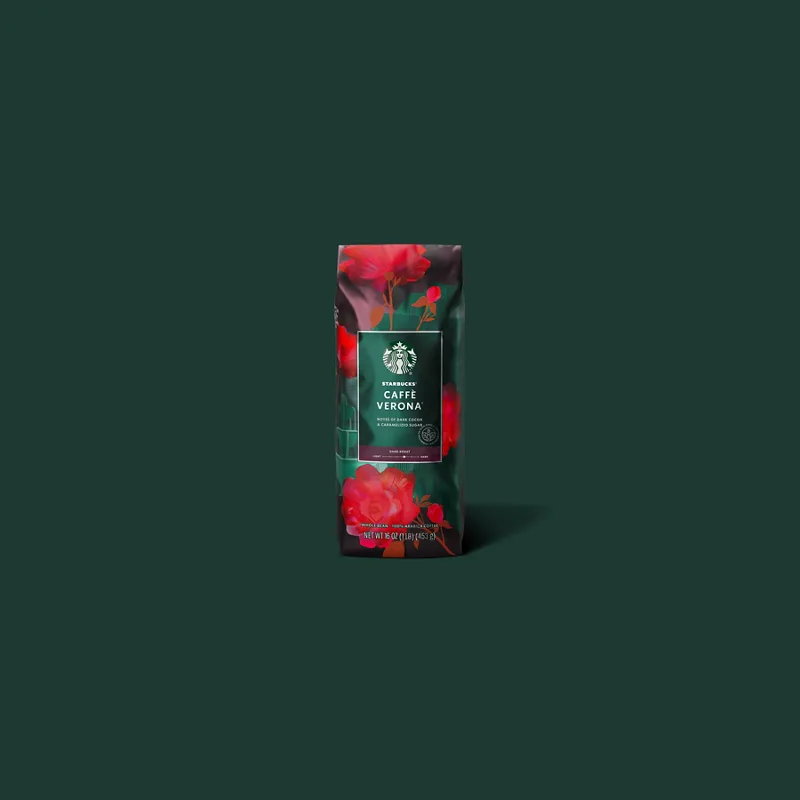
| Caffè Verona | Dark cocoa, roasty sweetness | Drip, with dessert |
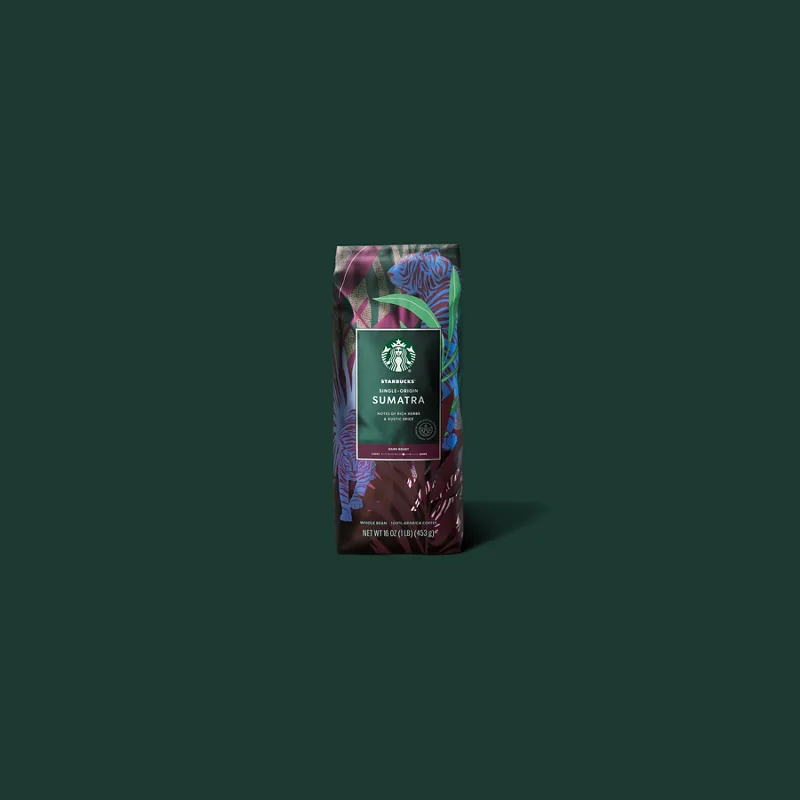
| Sumatra | Earthy, herbal, full body | French press |
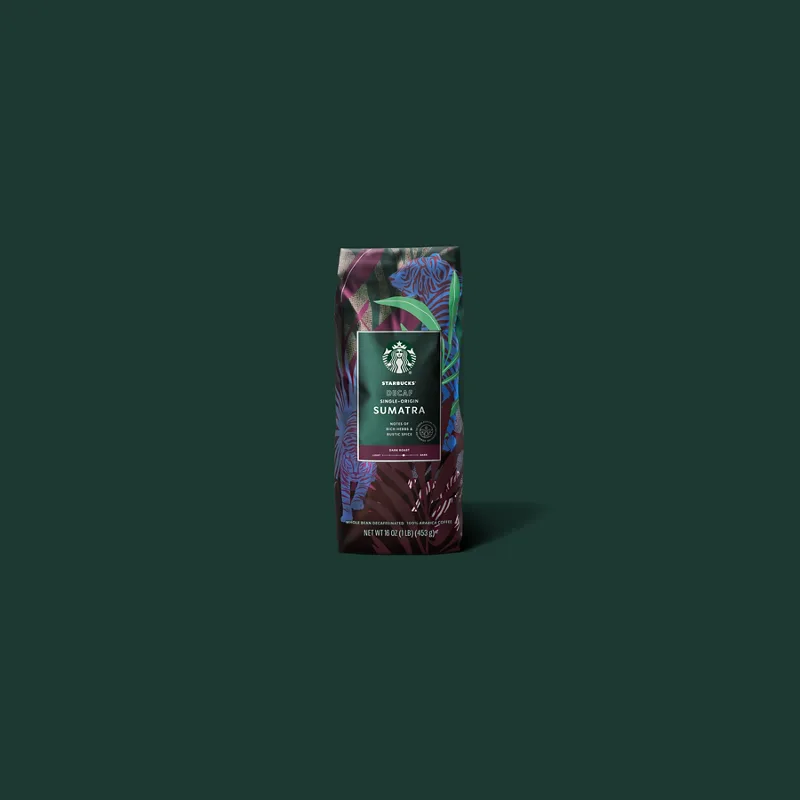
| Decaf Sumatra | Same, decaf | Evening press |
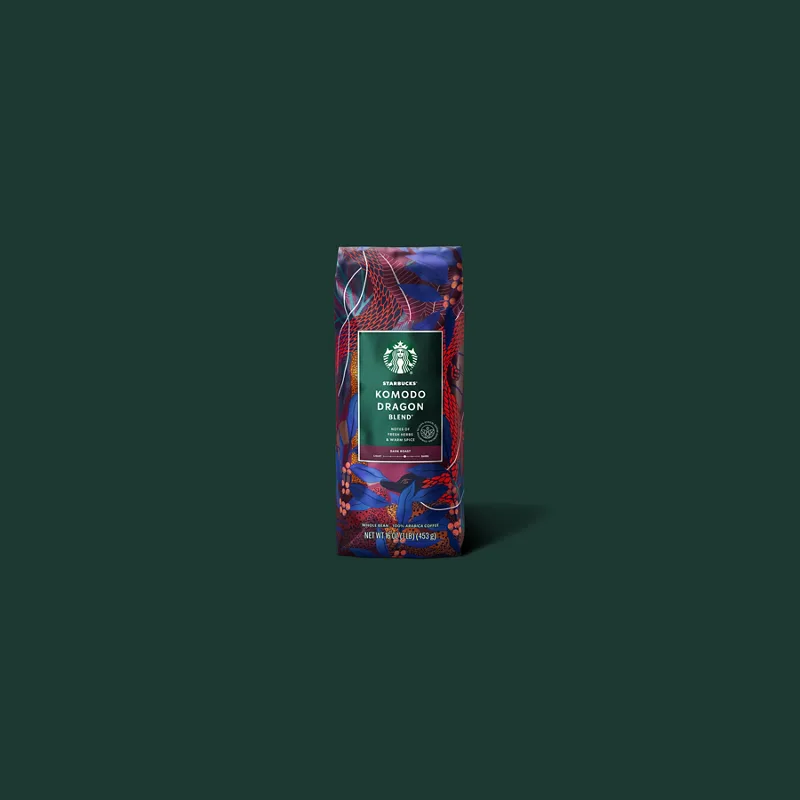
| Komodo Dragon Blend | Earthy, spicy, complex | French press |
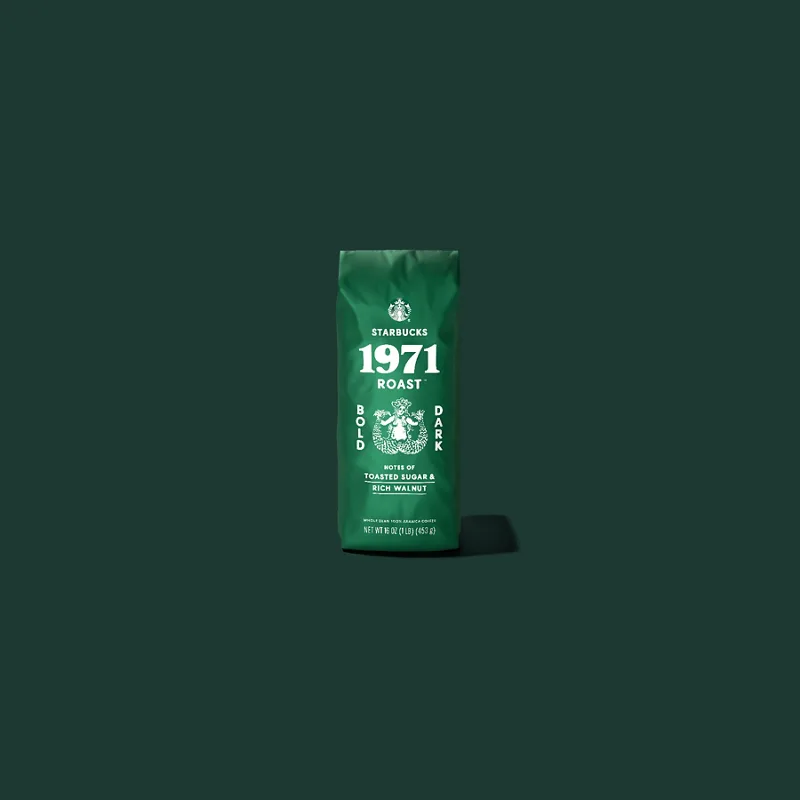
| Starbucks 1971 Roast | Toasted sugar, walnut | Drip, pour over |
The Seven Dark Bags
Espresso Roast
The Espresso Roast dates from 1975 and is the base of every Signature espresso drink in the store. Molasses and caramel, a multi-region blend, and the bag to buy if you want your home shots to taste like the counter.
Italian Roast
The Italian Roast is roasted a step darker than Espresso Roast, intense and sweet with deep caramel. It is the darkest everyday bag and the one that carries a lot of milk without disappearing.
Caffè Verona
The Caffè Verona was blended in 1975 for a Seattle restaurant to serve with chocolate desserts, and it still tastes like that: dark cocoa, roasty sweetness, a little Italian Roast folded in. The dessert coffee.
Sumatra and Decaf Sumatra
The Sumatra is a single-origin Indonesian coffee with earthy, herbal flavors and a heavy body, the coffee Starbucks' founders built the company around. The Decaf Sumatra is the same bean decaffeinated, and the only dark decaf on the shelf.
Komodo Dragon Blend
The Komodo Dragon Blend is an Asia-Pacific blend, earthier and spicier than Sumatra with a lingering finish. It is the boldest bag on the shelf and the one for a French press on a cold morning.
Starbucks 1971 Roast
The Starbucks 1971 Roast is the anniversary blend, toasted sugar and walnut, a little gentler than the others here. It is the dark roast for someone coming over from Pike Place.
Which Dark Roast for Which Brewer
- Espresso machine: Espresso Roast, fine grind. Italian Roast if you want it darker still.
- Moka pot: Espresso Roast or Verona at a medium-fine grind.
- Drip: Verona, 1971 Roast or Italian, medium grind; dark roasts extract fast, so a slightly coarser grind avoids bitterness.
- French press: Sumatra or Komodo Dragon, coarse, four minutes; body is the point of these two.
- Cold brew: Sumatra or Verona, coarse, 18 to 20 hours; dark cold brew is chocolatey and smooth.
- Pour over: 1971 Roast; the others are heavy for a paper filter.
- Aeropress: Espresso Roast or Verona, fine grind, a short steep; dark roasts suit the pressure and the quick contact time.
- Whatever the brewer, dose a little lighter than you would a medium; dark roasts extract more per gram and turn bitter if pushed.
Why Starbucks Roasts Dark
The company started in 1971 selling beans, not drinks, and the founders learned roasting from Alfred Peet, whose style was dark. That taste stayed as the chain grew, and it is why the espresso in every store is a dark roast and why the dark shelf is the longest on the at-home wall. The blonde and medium bags came later for customers who wanted less of it.
Dark vs Medium vs Blonde
A dark roast has the most body, the least acidity and, per scoop, a little less caffeine than Pike Place Roast or a blonde such as Starbucks Sunsera Blend. It is the roast for milk drinks, for a moka pot, and for anyone who wants coffee to taste like coffee rather than fruit. It is the wrong shelf for a light pour over or an iced coffee meant to be bright.
Prices, Grinding and Storage
- The reference store lists none of these for pickup, so no price is shown. Dark roast bags are priced in line with Pike Place at most stores; the app shows your store's figure.
- Stores grind any bag bought in store for any brewer.
- Dark roasts keep a little longer than blondes because the surface oil slows staling, but two to three weeks open is still the rule.
- Oily beans can clog cheap grinders and super-automatic machines; wipe the hopper.
- No nutrition panel exists for beans; black coffee from any dark bag is near zero calories.